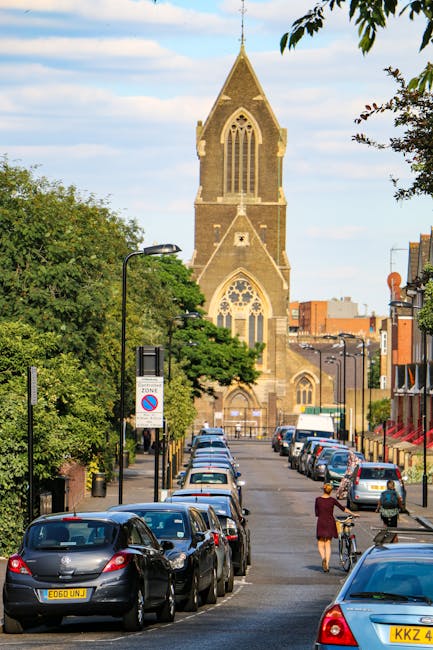
Belsize Park moving on Eton Avenue local removals tips

Moving home on Eton Avenue in Belsize Park sounds simple on paper. In real life, though, one missed parking detail, one awkward staircase, or one heavy item that will not fit through the front door can throw the whole day off. That is why Belsize Park moving on Eton Avenue local removals tips matter so much: they help you plan for the street itself, not just the boxes in your flat.
Eton Avenue has the kind of residential character that rewards good preparation. You may be dealing with period properties, tight communal entrances, basement access, controlled parking, or neighbours who would really prefer the move to start after their first cup of tea. Truth be told, local removals go more smoothly when you think like a local and move like a planner.
This guide covers the practical side of moving on Eton Avenue in Belsize Park: access checks, packing, loading order, timing, transport choice, and the small details that save time and money. If you are comparing help, you can also look at professional removals support, a flexible man and van option, or full house removals depending on the scale of your move.
Why Belsize Park moving on Eton Avenue local removals tips Matters
Local moves are often underestimated because the distance is short. That is exactly why they can become messy. A move from one Belsize Park address to another can still involve multiple trips, careful loading, narrow access, and time pressure if you are trying to avoid blocking the road too long. Eton Avenue is a good example of a street where planning makes a visible difference.
The practical challenge is not just the journey. It is the building access, the storage of your belongings while you move, and the way the vehicle fits into the street. If you have ever watched a sofa hover near a doorway while everyone tries to angle it just right, you will know what I mean. Small obstacles become big ones very quickly.
These tips matter because they help you reduce disruption, protect your furniture, and keep the move moving. They are also useful for anyone comparing local movers or deciding whether to book a small van, a larger moving van, or a more complete removal service. The right choice depends less on guesswork and more on access, volume, and timing.
There is another point, too. Moving day is tiring. If the practical parts are already handled, you can focus on the things that actually need your attention, like checking utilities, key handover, or making sure your kettle is easy to find. That first cup of tea really does matter.
How Belsize Park moving on Eton Avenue local removals tips Works
At its core, the process is about matching the move to the street. Start by understanding what is leaving, where it is going, and how it will be carried. Then shape the plan around that. Simple, but not always easy.
A local removals plan for Eton Avenue usually follows this pattern:
- Survey the property properly. Note floors, stairs, lifts, doorway widths, parking access, and any heavy or awkward furniture.
- Choose the right vehicle. A small load may suit a moving van, while larger household contents may need removal van support or a fuller team.
- Pack by priority. Essentials stay separate; fragile items get protection; bulky items are stripped down where possible.
- Book the move at a sensible time. Avoid peak traffic where possible, and think about neighbours, loading restrictions, and building access windows.
- Load in the right order. Heavy and stable items first, fragile items secured last, and essentials kept accessible.
- Unpack with a plan. Put furniture in place before opening too many boxes. Otherwise, everything turns into a pile and nobody enjoys that.
That is the basic flow. In practice, the best results come from checking what will slow you down before moving day arrives. A missing parking space or a door that swings awkwardly can add more time than an extra box ever will.
If you want help with wrapping, sorting, or room-by-room packing, packing and unpacking services can take a lot of pressure off the day itself.
Key Benefits and Practical Advantages
Good local removals planning gives you more than convenience. It improves the whole experience in a few very practical ways.
- Less wasted time: the team can start and finish with fewer delays if access is clear.
- Lower risk of damage: properly packed items and measured furniture reduce knocks, scrapes, and accidents.
- Better use of vehicle space: a planned load often means fewer trips and less shifting around.
- Less stress: you are not making decisions in the doorway while the clock is ticking.
- Cleaner handover: a more organised move makes it easier to leave the old place tidy and settle into the new one.
There is also a financial upside. When the move is efficient, you are less likely to pay for avoidable extra labour time. That does not mean every move becomes cheap overnight, of course. But it does mean you are not paying for confusion. And confusion is expensive, funny how that works.
For many residents, the real benefit is confidence. You know what is happening, what has been packed, and what should happen first. That sense of control is worth a lot on moving day.
Who This Is For and When It Makes Sense
These tips are useful for almost anyone moving in or around Eton Avenue, but they are especially helpful in a few common situations.
- Flat moves: if you are moving between apartments, access planning becomes crucial.
- Family home moves: larger furniture and more boxes mean coordination matters more.
- Single-room or studio moves: you may only need a small vehicle, but you still need a careful loading plan.
- Short-notice moves: local knowledge helps when time is tight and there is not much room for error.
- Older properties: period homes can have narrow stairs, tight turns, and quirky layouts.
It also makes sense if you are comparing different service levels. Some people only need a driver and loading help, which is where man with van support can be a good fit. Others want the whole job handled, from packing to placement, and that is where full removal services are more appropriate.
To be fair, there is no single right answer for everyone. The right option depends on how much you own, how much lifting is involved, and how much help you want on the day.
Step-by-Step Guidance
Here is a practical route through the move. Keep it straightforward. No need to overcomplicate it.
1. Walk the route before you move
Check the path from the front door to the vehicle. Look for stairs, tight corners, low railings, and anything that could catch a mattress or wardrobe. If the building has a side entrance or rear access, compare it with the front. Sometimes the obvious route is not the best one.
2. Measure the awkward items
Large sofas, beds, bookcases, and dining tables are the usual troublemakers. Measure them before moving day, then compare those numbers with the doorway and stair width. It is a boring job, yes, but it saves nasty surprises.
3. Sort and reduce
Before packing, decide what is staying, what is going to storage, and what should be donated, sold, or recycled. The less you move unnecessarily, the easier the day becomes. If you have bulky pieces that are no longer needed, a furniture pick-up may be the cleaner option than trying to carry them through a full house move.
4. Pack by room and priority
Label boxes clearly and keep each room together where possible. Essentials should be in one easy-to-find bag or box. That usually means chargers, medication, tea bags, toiletries, basic tools, and one change of clothes. The glamorous stuff can wait.
5. Protect fragile and high-value items
Wrap glass, artwork, electronics, and mirrors carefully. Use padding inside boxes so items cannot shift. If you are moving something genuinely delicate, it is often better to keep it with you rather than hope for the best in the back of a van.
6. Confirm access and timing
Check the move time, parking position, entry details, and any building rules. If the property manager needs advance notice, do not leave that to the morning of the move. That is one of those things that sounds obvious after the fact.
7. Load in a sensible sequence
Heavier items go in first, with fragile items protected and secured later. Leave the essentials near the door or the front of the vehicle if they will be needed immediately on arrival.
8. Settle the new home in the right order
Before unpacking every box, place the furniture where it belongs. It is much easier to move a chest of drawers across an empty room than through a room full of half-open boxes. Let's face it, nobody wants to do that twice.
Expert Tips for Better Results
A few smaller decisions can make a surprisingly big difference on Eton Avenue.
- Keep one "first night" box: kettle, mugs, snacks, phone chargers, toiletries, and bedding. You will thank yourself later.
- Use colour labels: a simple colour per room reduces confusion when items are carried in quickly.
- Disassemble early: beds, table legs, and shelving often move better when broken down in advance.
- Protect floors and walls: in older London properties, it is worth being extra cautious with corners and bannisters.
- Photograph cable setups: if you have a complex TV, office, or sound system, photos save time during reassembly.
- Think about the weather: a wet pavement or cold morning can make loading slower and more slippery than expected.
A small aside: a roll of tape and a marker pen will seem like the most valuable objects in the house for about 24 hours. Not joking.
If your move is part of a wider property change, or you are coordinating possessions from multiple places, it can help to speak to an experienced removal company rather than trying to improvise on the day.
Common Mistakes to Avoid
Most moving problems are not dramatic disasters. They are small mistakes that pile up.
- Underestimating volume: a flat that looks "small" can still generate more boxes than expected.
- Ignoring access: stairs, narrow hallways, and controlled entry can matter more than the journey itself.
- Leaving packing too late: rushed packing leads to broken items and missing essentials.
- Forgetting parking: on busy streets, you cannot assume a space will magically appear.
- Mixing essential and non-essential items: the first night becomes harder when you cannot find basics.
- Not checking insurance or responsibility: always understand what is covered and what is not.
One common local issue is trying to move everything at once without checking whether the vehicle can stop close enough to the entrance. That extra 15 metres can feel like a marathon when you are carrying a washing machine. Small detail, big consequence.
Another mistake is assuming that because a move is local, it can be handled casually. It can't, not if you want a calm day. Local simply means the drive is shorter. It does not mean the lift is easier.
Tools, Resources and Recommendations
You do not need fancy equipment, but a few simple tools make the job smoother.
- Strong boxes: use consistent box sizes where possible so stacking is safer.
- Packing tape: make sure it is good-quality tape, not the weak kind that peels off when you look at it.
- Marker pens and labels: clear labels reduce confusion and speed up unloading.
- Furniture covers and blankets: useful for protecting wood, upholstery, and corners.
- Basic toolkit: screwdrivers, Allen keys, and a utility knife can be very handy on the day.
- Mobile phone with fully charged battery: simple, but essential for coordination.
For the service side, compare how much help you actually need. A smaller move may suit man with van removal support, while bigger homes often benefit from a full team and perhaps a larger moving truck. If your move is mostly about a few items and flexibility, man and van removals can be a practical middle ground.
If you are still deciding, it can help to review pricing and quotes so you understand what shapes the cost and how different move sizes are usually approached.
Law, Compliance, Standards, or Best Practice
For a local move in London, the main thing is to follow normal safe-moving practice and any property-specific rules that apply. That usually means checking access permissions, keeping pathways clear, and handling goods with due care. If you are moving in a managed block, there may be building rules about lift use, moving hours, or where vehicles can load and unload. Those are not optional just because the move is short.
Best practice also includes clear communication about fragile items, weight limits, and any difficult furniture. If a sofa needs two people, it needs two people. If a fridge needs to stay upright, it should stay upright. Common sense, but easy to ignore when you are in a rush.
It is also sensible to check the mover's policies on safety, insurance, and customer process. Useful references on the same site include insurance and safety, health and safety policy, terms and conditions, and recycling and sustainability. Those pages help set expectations around responsibility, careful handling, and sensible disposal where needed.
For business moves or mixed household and office relocations, the same principles still apply, although the coordination becomes more involved. If relevant, you may want to look at commercial moves or office removals for a clearer sense of service scope.
Options, Methods, or Comparison Table
Choosing the right moving method is often the biggest practical decision. Here is a simple comparison to help.
| Option | Best for | Typical strengths | Watch-outs |
|---|---|---|---|
| Man and van | Small flats, short local moves, a few bulky items | Flexible, often straightforward, good for lighter jobs | May not suit very large loads or complex access without extra planning |
| Moving van | Medium moves with several boxes and furniture pieces | Balanced capacity and manoeuvrability | Needs clear access planning if the street is tight |
| Full removals service | Family homes, multiple rooms, fragile or heavy contents | More support, better coordination, less physical strain for you | Usually the most involved option, so planning still matters |
| Removal truck hire | Larger loads or more complicated transport needs | High capacity, useful for fuller house moves | Overkill for small local moves if access and volume are modest |
The right choice is not always the biggest vehicle. Sometimes the smartest move is the one that matches the street. On Eton Avenue, manoeuvrability can matter just as much as capacity. A larger vehicle is only helpful if it can actually get in and out comfortably.
Case Study or Real-World Example
Imagine a couple moving from a second-floor flat on Eton Avenue to another home nearby in Belsize Park. They have a sofa, a bed frame, six medium boxes of books, kitchen items, and a few fragile lamps. At first glance, they think a simple van will do. Then they check the stairwell, and the sofa is clearly going to need careful turning. Not impossible, just more awkward than expected.
They split the job into three parts. First, they measure the larger items and decide which can be dismantled. Second, they pack the essentials separately so they can sleep and make tea on the first night. Third, they book a vehicle large enough for the furniture but still practical on the street. They also keep the loading path clear and ask the building manager about timing.
The move still takes effort, of course. There is always a box that seems to hide until the last minute. But because the access was checked early and the loading order was planned, the day runs without the usual scramble. No last-minute arguments, no frantic searching for a phone charger, and no sofa getting stuck at a doorway. A decent outcome, really.
That example is typical of a well-managed local move. Nothing magical. Just sensible steps, taken early.
Practical Checklist
Use this checklist in the final 48 hours before your move on Eton Avenue.
- Confirm the moving time and access arrangements.
- Check parking and unloading space near both addresses.
- Measure all large furniture and doorways.
- Pack an essentials box for the first night.
- Label every box by room and priority.
- Disassemble beds, tables, and shelving if needed.
- Protect fragile items with proper padding.
- Keep valuables and important documents with you.
- Reserve a sensible vehicle size for the load.
- Keep pathways clear at both properties.
- Check final meter readings and keys.
- Leave time for a last sweep of cupboards, lofts, and behind doors.
And if you feel behind, pause. Do the next sensible task, not all the tasks. That's often the difference between a manageable move and a chaotic one.
Get a free quote today and see how much you can save.
Conclusion
Belsize Park moving on Eton Avenue local removals tips are really about one thing: making a local move feel controlled instead of reactive. When you account for access, timing, packing, and vehicle choice early, the whole day becomes easier to handle. The street stops being an obstacle and starts being just part of the plan.
Whether you are moving a one-bedroom flat or a family home, the same rule applies. Measure properly, pack carefully, and choose a service that fits the job. If you do that, you give yourself a much calmer move and a far better first evening in the new place. Simple, but it works.
And honestly, a smooth local move is one of those rare life admin victories that feels better than it should. Take the win.
Frequently Asked Questions
What should I check first when moving on Eton Avenue in Belsize Park?
Start with access. Check stairs, lifts, doorway widths, parking, and how close the vehicle can get to the entrance. Those details usually affect the day more than the distance between addresses.
Is a man and van enough for a local move in Belsize Park?
Sometimes, yes. If you have a modest load, fewer bulky items, and straightforward access, it can be a good fit. If you have a larger household or tricky furniture, a fuller removals service may be the better option.
How early should I book removals for Eton Avenue?
As early as you reasonably can, especially if you want a preferred time or need help with larger furniture. Local moves may seem easy to arrange at the last minute, but decent planning usually gives you better availability and less stress.
What is the best way to avoid damage during a local move?
Use proper packing materials, dismantle what can be safely dismantled, secure fragile items, and load the vehicle in a stable order. Damage often happens when items shift, tip, or get squeezed at awkward angles.
Should I measure my furniture before moving day?
Yes, especially larger pieces like sofas, wardrobes, beds, and dining tables. It is one of the simplest ways to avoid nasty surprises at doorways and staircases.
What if parking is limited on Eton Avenue?
Then parking should be part of your moving plan from the start. You may need to allow extra time, reduce the number of trips, or choose a vehicle that can load and unload more efficiently near the property.
Do I need packing help for a local move?
Not always, but it can be a real time-saver if you are busy, moving fragile items, or working to a tight schedule. Packing and unpacking services are especially useful when the move overlaps with work or family commitments.
How do I decide between a moving van and a removal truck?
Think about volume, access, and how much you want to move in one go. A moving van often suits smaller or medium loads. A removal truck is better for bigger household contents, but only if the street and access can support it comfortably.
Are there safety or insurance points I should ask about?
Yes. Ask what is covered, how items are handled, and what the mover's general safety approach is. It is sensible to review pages such as insurance, health and safety, and terms before you commit.
What is the biggest mistake people make on moving day?
Usually it is underestimating how long the access and loading will take. People often focus on the journey and forget the stairs, the boxes, the doors, and the parking. That's where time goes.
Can I combine furniture pick-up with a house move?
Yes, if you are clearing out bulky items at the same time. It can be more efficient than handling old furniture separately, especially if you are trying to reduce what needs to be moved into the new home.
How can I keep the first night in the new place easier?
Prepare a clearly labelled essentials box with bedding, toiletries, chargers, snacks, and basic kitchen items. It sounds small, but it makes the first evening feel much more settled.